

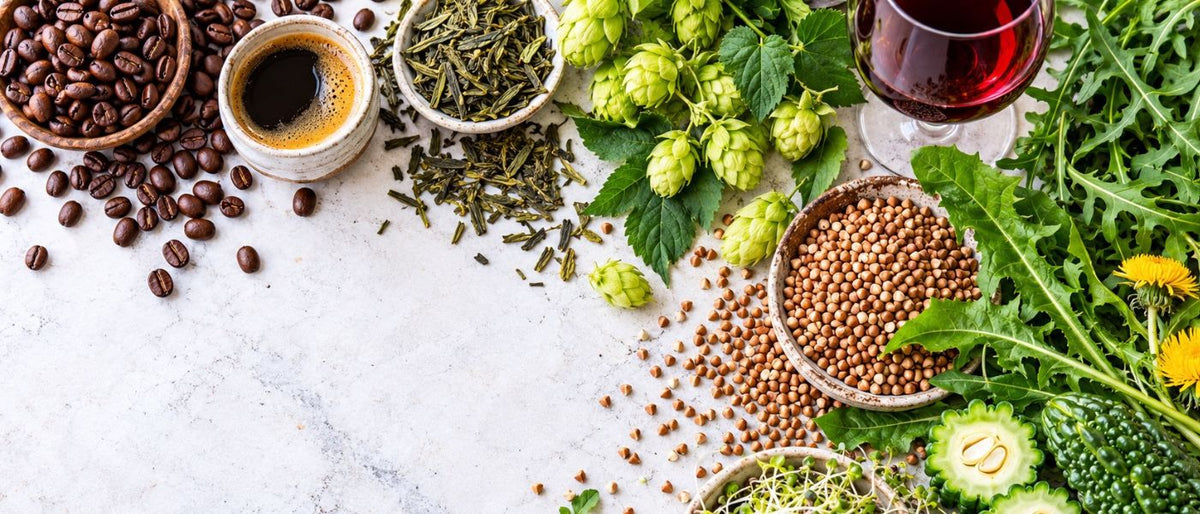

Coffee, green tea, Tartary buckwheat, dandelion greens, hops, rocket greens, bitter melon, red wine, and broccoli sprouts contain phytochemicals that contribute bitterness, astringency, or pungency—and have biological activities extending beyond taste.
These substances include polyphenols, terpenoids, and glucosinolates. Their effects depend on chemical structure, dose, preparation, and how the body metabolizes them. Human evidence supports certain benefits for vascular function, cholesterol, glucose regulation, and cellular protection. Direct evidence that each food improves immune resilience is more limited.
|
Food or beverage
|
Characteristic bitter or associated bioactive substances
|
Health benefits and strength of evidence
|
|---|---|---|
|
Coffee
|
Chlorogenic acids, roasting-derived chlorogenic acid lactones, and caffeine
|
Small randomized trials show that chlorogenic acids and their metabolites can improve blood-vessel responsiveness. Other trials have found no vascular benefit, indicating that composition and individual responses matter.
|
|
Green tea
|
Catechins, including EGCG, and caffeine
|
Human trials support modest reductions in LDL cholesterol. Experimental studies also show effects on cellular stress and inflammatory signaling, although these do not establish clinical immune benefits.
|
|
Rutin, quercetin, and related flavonoids; quercetin contributes to bitterness
|
A randomized dietary trial in people with type 2 diabetes reported improved insulin resistance and lipid profiles. Experimental findings suggest effects on inflammatory signaling, but whole-food benefits cannot be attributed solely to bitter flavonoids.
|
|
|
Dandelion greens
|
Bitter sesquiterpene lactones, alongside chicoric acid and flavonoids
|
Extracts reduce inflammatory responses in cell and animal experiments. Comparable benefits from eating dandelion greens have not yet been established in strong human trials.
|
|
Hops
|
Humulones, lupulones, processing-derived isohumulones, and xanthohumol
|
Isohumulones influence PPAR receptors involved in glucose and lipid metabolism. A small human pilot study suggested improved glucose control. This preliminary evidence does not establish beer as a health intervention.
|
|
Rocket greens—arugula
|
Glucosinolates and their breakdown products, including erucin; quercetin and kaempferol derivatives
|
Erucin influences cellular defense and inflammatory pathways in laboratory studies. Human-cell experiments suggest vascular protection, but clinical benefits specifically attributable to eating rocket remain unproven.
|
|
Bitter melon
|
Bitter cucurbitane-type triterpenoids, including momordicosides, plus other bioactive constituents
|
Some human trials of particular preparations suggest improved glucose control. Results vary, and culinary portions cannot be assumed to reproduce standardized-extract effects. Direct immune evidence remains predominantly preclinical.
|
|
Red wine
|
Flavanols, proanthocyanidins, anthocyanins, and smaller quantities of resveratrol; tannins contribute astringency
|
A randomized crossover trial found that dealcoholized red wine lowered blood pressure and increased circulating nitric oxide. This supports activity of the nonalcoholic fraction; it does not establish a net health benefit from alcoholic wine.
|
|
Broccoli sprouts
|
Glucosinolates, especially glucoraphanin, which can be converted into sulforaphane
|
Sulforaphane activates cellular protective pathways, particularly NRF2. A randomized human trial of a standardized sprout beverage increased urinary excretion of metabolites of certain airborne pollutants, providing evidence of enhanced processing and elimination. This does not prove generalized “detoxification” or disease prevention.
|
The coffee findings include both positive and null controlled trials. Human intervention studies also support the metabolic observations described for Tartary buckwheat, hops-derived isohumulones, and selected bitter-melon preparations. pubmed.ncbi.nlm.nih.gov Evidence for dandelion and rocket comes principally from experimental research; the red-wine and broccoli-sprout findings come from human trials. www.frontiersin.org
Bitter compounds can influence intestinal signaling. Bitter-taste receptors occur in intestinal hormone-producing cells as well as in the mouth. Experiments show that activating particular receptors can stimulate GLP-1 release, connecting chemical sensing with glucose regulation. However, this does not establish that all these foods meaningfully increase GLP-1 in humans, or that dietary effects approach those of GLP-1 medications. pubmed.ncbi.nlm.nih.gov
Their actions can extend beyond direct antioxidant activity. Dandelion extracts and rocket-derived erucin affect pathways governing inflammatory responses and cellular protection in experimental models. This means that some phytochemicals influence how cells respond to stress, rather than simply neutralizing free radicals. Whether ordinary dietary portions reproduce laboratory effects requires human validation. pmc.ncbi.nlm.nih.gov
Broccoli sprouts illustrate this distinction particularly well. Their glucoraphanin is a precursor: the enzyme myrosinase converts it into sulforaphane when plant tissue is disrupted. Sulforaphane promotes the expression of protective enzymes involved in handling reactive chemicals. In a 12-week randomized trial, a standardized broccoli-sprout beverage increased the excretion of metabolites derived from benzene and acrolein. The result demonstrates a specific physiological effect, while leaving broader claims about longevity or immune rejuvenation unresolved. pmc.ncbi.nlm.nih.gov
Metabolic benefits provide a plausible connection to immune resilience.Glucose regulation, lipid handling, and vascular function influence the environment in which immune cells operate. Findings with Tartary buckwheat, hops compounds, and some bitter-melon preparations therefore have potential immunometabolic relevance. Nevertheless, improved metabolic markers are not equivalent to demonstrated immune rejuvenation. www.sciencedirect.com
Green tea provides a useful example of a measurable, modest benefit. An analysis of 31 randomized trials found an average LDL-cholesterol reduction of approximately 4.6 mg/dL, without significant overall improvements in HDL cholesterol or triglycerides. This supports a specific cardiovascular effect while leaving broader immune claims open. pubmed.ncbi.nlm.nih.gov
Red wine requires an additional distinction: the biological activity of grape polyphenols does not cancel the risks of alcohol. The blood-pressure findings with dealcoholized wine suggest that alcohol is unnecessary for that effect. Alcoholic red wine still carries alcohol-related cancer risk, so it should not be introduced as an immune-resilience or longevity intervention. pubmed.ncbi.nlm.nih.gov
Together, these foods demonstrate the chemical diversity behind bitter flavors. Their bioactive substances can influence different pathways involved in metabolic regulation and cellular protection. The scientifically supported message is that selected bitter plant foods can contribute to a varied dietary pattern that supports health; bitterness itself is neither a measure of potency nor a guarantee of benefit.


